
Journal · A guide · 7 minutes
How to plan a proposal in Singapore: a story, not a package
A guide to proposing in Singapore without petals and LED letters: choose the place, build the day in three acts, keep the secret, plan for rain.
Looking for the real thing? Every immersive story we have written — with photographs and film — and the day you can order, played by live actors like a movie, is on the main page →
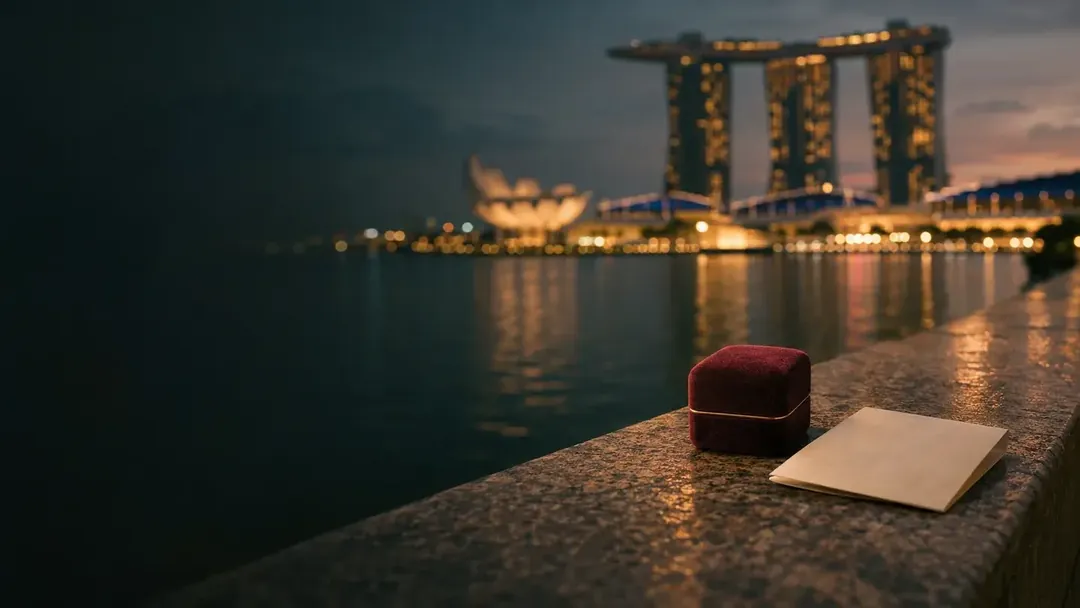
Search for a proposal planner in Singapore and you will find the same afternoon sold a hundred times: rose petals in the shape of a heart, light-up letters that spell MARRY ME, a photographer crouched behind a pillar at the Marina Bay Sands SkyPark. These work. People say yes to them every weekend.
But they are the same for everyone, and the person you are asking is not everyone. This guide is for the other way: a proposal built like a short story, with a beginning that looks ordinary, a turn, and a last scene that could only have happened to one person. You can do most of it yourself. Where you cannot, we say so.
Start with the person, not the place
Every planner begins with the venue. Begin somewhere else, with a piece of paper and three questions.
What does she notice? Some people see buildings, some see dogs, some see what other people are wearing. Hide the proposal inside the thing she already looks at.
What would he never expect from you? If you always book the table, the surprise is not a nicer table. It is you doing something that needs planning, patience and other people.
Who has to be there, and who must not? Twenty friends behind a hedge and nobody at all are two different days. Neither is wrong. Decide before anything else, because it changes the place, the time and the budget.
Choose a place that means something, or make it mean something
Singapore has a short list of famous proposal spots: the SkyPark, Gardens by the Bay at night, Henderson Waves, the Merlion with the skyline behind. They are crowded because they are famous. On a Saturday evening you will share the moment with three other couples and a coach party.
The quieter list is better. The kopitiam where you had your first breakfast together. A rooftop garden on an HDB car park in Punggol or Bishan at seven in the evening. Fort Canning on a weekday, when the spice garden is empty. The Changi boardwalk at low tide. The bumboat to Pulau Ubin, with the question asked on the water. Labrador Park at dusk, ships lined up on the horizon.
A place does not have to mean something before the day. It can be made to mean something during it: the third stop on a walk, the bench where a stranger left an envelope.
One practical note. Parks and reservoirs are managed by NParks and PUB. If you plan to bring anything bigger than a bag, or anything that stays on the ground, check whether a permit is needed. Drones need permission almost everywhere in the city. A proposal is not improved by a ranger asking you to pack up.
Build the day in three acts
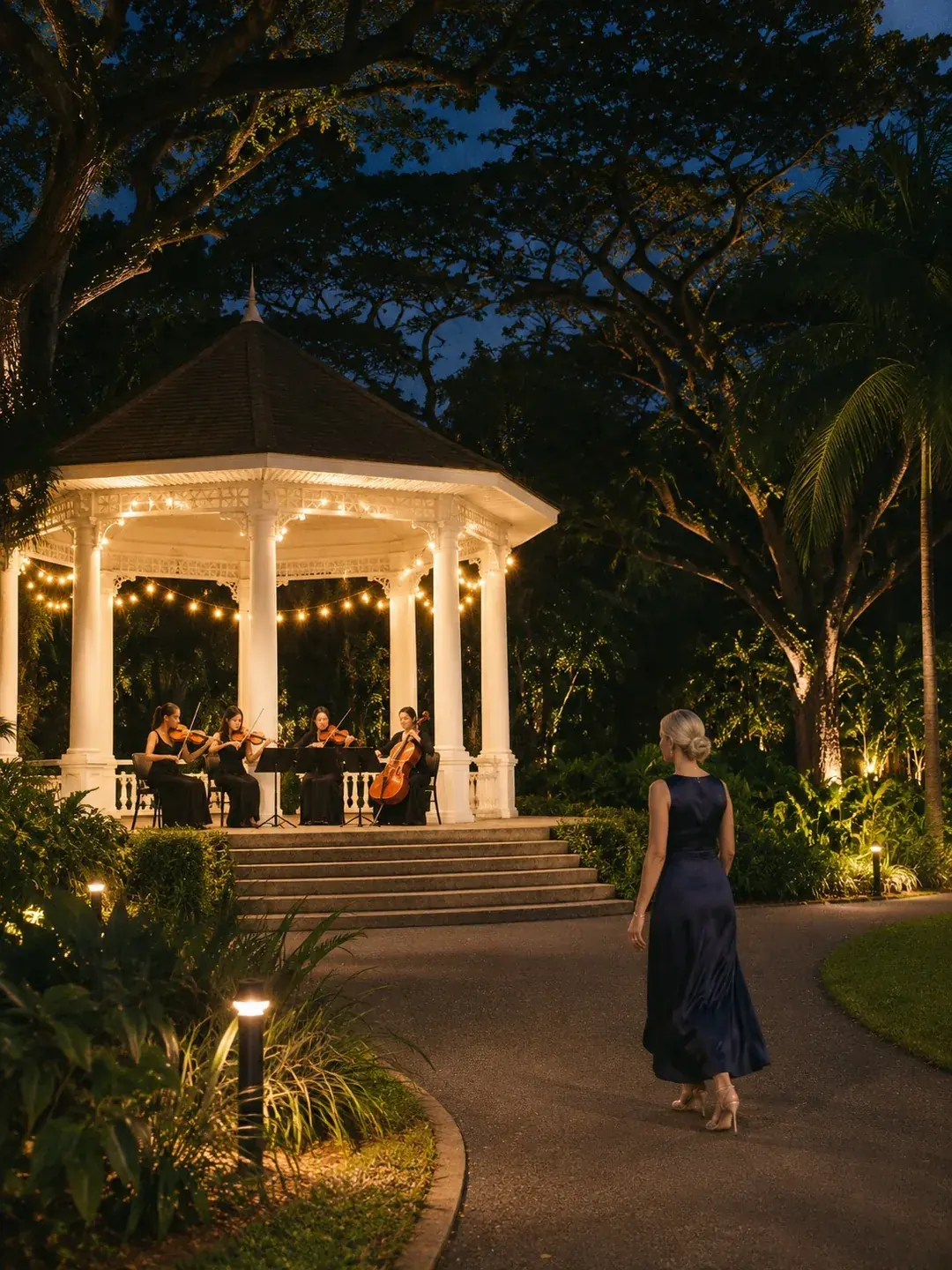
Packaged proposals feel packaged because they have one scene: the reveal. A story has three.
Act one is ordinary. Saturday morning. Breakfast where you always have it. Nothing is different, except that one small thing is slightly wrong: a note tucked into the menu, a shopkeeper who uses her name without being told it. She notices, or she does not. Either way, the day has started.
Act two is the turn. Something leads somewhere. A series of places, each with a reason. A friend appears where no friend should be. A bookshop owner has been keeping something behind the counter for weeks. The city starts to feel like it is in on something, and it is.
Act three is the question. By now the place has been earned. She arrives where she was always going to arrive, and the ending is told once, to one person.
Write the three acts on one page before you book anything. If act one is blank, you have a reveal, not a proposal.
Keep the secret
The biggest risk to a proposal in Singapore is not rain. It is the shared calendar.
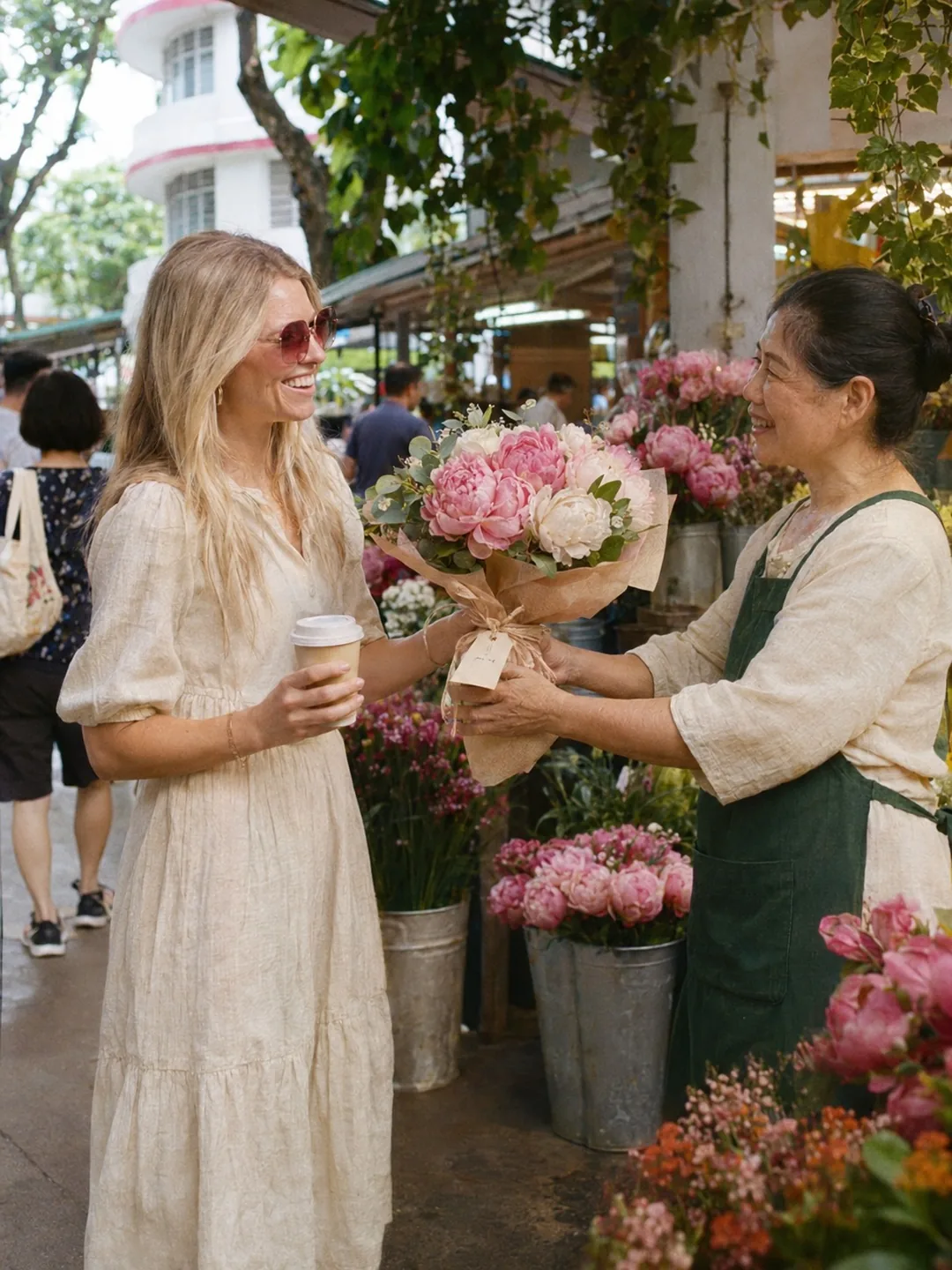
Give the day a cover story that explains everything: a friend's brunch, a wedding, a work thing. It should account for the clothes, the time and the place, so that your real arrangements look like part of the other plan.
Tell as few people as possible, and tell them the same version. The friend who knows about the photographer does not need to know about the ring. Nobody needs the date until the week before.
The photographer and the ring
A photographer is the one professional most proposals need and the one most often badly used. Hire someone who has done this before, brief them with the three acts, and give them one rule: the camera must not be seen before the question. The photographs that matter are the three seconds after, not the thirty minutes of posing.
The ring is simpler than people make it. A pocket that closes. Never a bag she might pick up.
Plan for the rain
It rains most afternoons between November and January, and without warning the rest of the year. A proposal that depends on a sunset depends on luck.
Build the ending so that it works in either weather: a sheltered walkway, a shophouse five-foot way, a covered rooftop, a boat with a canopy. If the perfect place is outdoors, have a second place within two hundred metres and a reason to go there that fits the story. Rain can be part of act two. It cannot be the whole of act three.
The people at the end
If friends or family are part of it, they belong in the last scene, not the first. Hide them at the final place, not along the route, with one instruction: silence until the answer. A video call with parents overseas works if someone else holds the phone and the call is connected before the question.
A timeline that works
Eight weeks out: the three questions, the three acts, the date, the cover story. Six weeks: walk the route on the same weekday at the same hour; note the crowds, the light, where the rain would send you. Four weeks: brief the photographer and anyone else; confirm permits. Two weeks: a second walk-through; prepare the notes, the envelope, whatever the bookshop owner is keeping. The day before: check the forecast, charge everything, tell nobody new.
When to bring in a writer
Everything above, one determined person can do. What one person cannot do alone is make the city take part. A stranger at the bus stop who knows her name. A hawker who has been waiting all morning with an envelope. A gallery with one portrait in it that was always her. Those need actors who have rehearsed for days, a script written around one person, and someone running the day from a distance while you walk beside her.
That is what we write. We do not book the dinner, the venue, the boat or the flowers; you do, or a partner we introduce does. We write the story, cast it and put it on the streets of Singapore for one person who does not know the ending. If the question deserves more than a reveal, start with how we write a proposal. If you are not quite at the question yet, start with a date written for two and work up to it.
Either way, begin with the person. The place will follow.
The day we write
When you want to ask it properly
Tell us who she is, where it began and what she must never suspect. We write the proposal as a story with a cast, a route and one envelope at the end. Two to ten weeks from the first conversation.